- Home Page /
- Industrial Supplies /
- Test, Measure & Inspect /
- Substance Analysis Instrumentation /
- Spectrometry /
- Spectrometers /
- Arbor Scientific Project Star Precision Spect...
0 ratings

Item #:
41745406
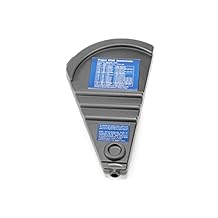
Arbor Scientific Project Star Precision Spectrometer, Spectra Observation Instrument with Built in Chart, 31 x 18 cm
Item #:
41745406
BWP 1278
Price Details
Excluding Shipping & Custom charges ( Shipping and custom charges will be calculated on checkout )
*All items will import from US
0 ratings
Write a review
In stock
 Imported from USA store
QTY:
Order now and get it around Sunday, July 05
Secured transaction
Ubuy works hard to protect your security and privacy. Our advanced payment security system ensures confidentiality by encrypting your information during transmission using AES (Advanced Encryption Standards) and SSL (Secure Socket Layer) protocols. Your payment details are 100% secure as we do not share your payment details with third party sellers.
Our Top Logistics Partners


The spectrometer developed at Harvard Center for Astrophysics’ Project STAR enables students to identify different elements in various light sources.

Fast
Shipping

Free
Return*

Secure Packaging

100% Original Products

PCI DSS Compliance

ISO 27001 Certified


Note: Step Down Voltage Transformer required for using electronics products of US store (110-120). Recommended power converters Buy Now.


What Stands Out
Precision Measurement
Offers highly accurate spectral measurements, making it ideal for educational and research settings, ensuring users obtain reliable data in various experiments.
Built-in Charting
Includes an integrated chart for easy observation of spectra, enhancing user experience by simplifying data recording and analysis in real-time.
Compact Design
Measuring 31 x 18 cm, this spectrometer provides portability without compromising functionality, making it easy to transport for experiments in different environments.
Product Details
| Item Weight | 4 lbs (1.81 kg) |
Who Should Buy?

-
Students
Ideal for high school and college students studying physics or chemistry to visualize and analyze light spectra.
-
Teachers
Effective teaching tool for educators aiming to demonstrate spectroscopy principles in classroom experiments.
-
Hobbyists
Great for science enthusiasts or hobbyists interested in exploring light properties and conducting experiments at home.

-
Professionals
Not suitable for advanced researchers needing high-precision, professional-grade spectrometry equipment in their work.
-
Casual Users
Not ideal for those looking for simple, everyday use as it requires some knowledge of spectrometry.
-
Limited Spaces
Inapplicable for users with limited workspace, as the instrument requires a dedicated area for operation.
Product Description
Arbor Scientific Project Star Precision Spectrometer, Spectra Observation Instrument with Built in Chart, 31 x 18 cm
Have any Query? Chat with us
Customer Questions & Answers
-
Question:
What is the Arbor Scientific Project Star Precision Spectrometer used for?
Answer: The Arbor Scientific Project Star Precision Spectrometer is designed for observing and analyzing light spectra. It's ideal for educational purposes, particularly in chemistry and physics classes, allowing students to explore concepts such as wavelength, frequency, and the nature of light. By utilizing a built-in chart, users can easily record observations and compare different light sources, enhancing their understanding of spectrometry and its applications in real-world scenarios. -
Question:
How does the built-in chart facilitate learning with the spectrometer?
Answer: The built-in chart of the Arbor Scientific Spectrometer is specifically designed to help users document their findings in a structured manner. It allows for side-by-side comparisons of various light spectra which enhances observational skills. By providing a visual aid, students can better grasp complex concepts through real-time data collection. This hands-on approach fosters engagement and improves retention of scientific principles, making it perfect for classroom demonstrations or individual experiments. -
Question:
Is the Arbor Scientific Project Star Precision Spectrometer suitable for beginners?
Answer: Yes, the Arbor Scientific Project Star Precision Spectrometer is well-suited for beginners, making it a great introduction to the fascinating world of optics. Its user-friendly design and straightforward operation allow new users, such as students or hobbyists, to start immediately. With its clear visual output and accompanying chart, beginners can easily learn to identify and differentiate various spectra, solidifying foundational knowledge in physics and light behavior. -
Question:
What types of light sources can be used with the Project Star Spectrometer?
Answer: The Project Star Spectrometer can be used with a variety of light sources, including incandescent bulbs, fluorescent lights, LEDs, and even sunlight. This versatility allows users to observe and analyze different spectra produced by each light type. By experimenting with various sources, users can appreciate how light behaves differently depending on its origin, enabling deeper insights into concepts such as emission and absorption spectra. -
Question:
Can the spectrometer be used in advanced scientific studies?
Answer: While the Arbor Scientific Project Star Precision Spectrometer is primarily geared towards educational purposes, it can indeed be used in basic advanced scientific studies. Its precision allows for the observation of spectral lines and variation in light sources important in fields like chemistry and astronomy. Researchers and enthusiasts alike can apply their findings to deeper explorations in spectroscopy and materials analysis, bridging the gap between education and practical scientific application. -
Question:
What are the dimensions and specifications of the Arbor Scientific Spectrometer?
Answer: The Arbor Scientific Spectrometer measures 31 x 18 cm, making it compact yet spacious enough to provide an accurate view of light spectra. Its precision optics and user-friendly design ensure reliable results during observations. This size is ideal for classroom labs, allowing for easy handling and storage while still being capable of producing high-quality spectral analysis. Its specifications make it an excellent choice for both educational institutions and personal use. -
Question:
Is there a manual or guide provided with the spectrometer?
Answer: Yes, the Arbor Scientific Project Star Precision Spectrometer typically comes with a manual that provides detailed instructions on its setup and operation. The guide outlines the steps for conducting experiments and tips for recording findings effectively. This resource is invaluable for users new to spectroscopy, offering step-by-step guidance that enhances the learning experience and ensures proper use of the instrument in various experiments. -
Question:
How do you properly calibrate the Arbor Scientific Spectrometer?
Answer: Calibrating the Arbor Scientific Project Star Spectrometer involves adjusting it based on a known light source to ensure accurate readings. Users should follow the included guide for step-by-step calibration procedures, which typically include referencing a standard light spectrum. Proper calibration is critical for obtaining reliable measurements when conducting experiments, allowing users to trust their data whether for educational experiments or more serious research projects. -
Question:
Can the spectrometer be connected to other devices for enhanced experiments?
Answer: The Arbor Scientific Project Star Spectrometer is designed for standalone use; however, it provides the potential for integration with imaging devices or software to enhance experimental analysis. By connecting to cameras or tablets, users can capture and analyze spectrometer readings in more detail. This capability enriches data presentation and allows for more complex analysis and reporting, useful for both educational and research purposes. -
Question:
What safety precautions should be taken when using the spectrometer?
Answer: When using the Arbor Scientific Project Star Spectrometer, standard safety precautions should be observed. Avoid staring directly at bright light sources to prevent eye damage, and ensure that the workspace is clean and organized to prevent accidents. Additionally, when using UV or high-intensity lights, appropriate personal protective equipment such as goggles should be worn. Following these simple guidelines ensures a safe and effective exploring experience with the spectrometer. -
Question:
Where can I buy the Arbor Scientific Project Star Precision Spectrometer in Botswana?
Answer: You can conveniently purchase the Arbor Scientific Project Star Precision Spectrometer at Ubuy. Ubuy offers a variety of educational instruments and tools, making it a reliable source for securing your spectrometer. With Ubuy’s efficient platform, finding and ordering the correct scientific equipment becomes straightforward with just a few clicks, ensuring that you have the tools you need for your educational or experimental pursuits.
Arbor Scientific Spectrometers Editorial Review
**Editorial Review** The spectrometer in question has garnered a mixed reception from customers, primarily serving as a budget-friendly option for educational purposes, particularly school experiments. At its price point of under $100, many users have found it to outperform competing devices in the same range, even if it does fall short of professional standards. Customers appreciate its Construction tailored for classroom use; however, they express significant frustrations with its design and usability. Reviewers highlight that while it feels like a toy made of plastic, it offers features intended for learning about light spectra. The spectrometer is noted for its non-adjustable scale, leading to calibration challenges, which have driven some users to despair over accuracy. Users have reported discrepancies in readings, struggling to attain precise measurements as the instrument tends to yield results that are low by several nanometers. Another recurring theme is the insufficient instructions provided for operation, leaving those without prior experience in spectroscopy feeling lost. The optical design presents challenges as well, with a tendency to obstruct clear viewing of the spectrum, causing obstacles in aligning with the light source. Despite these setbacks, there is a Consensus that no other spectrometer under $100 comes close in quality, suggesting that for those willing to navigate its quirks, it could serve as a useful educational tool. However, more advanced users or those expecting higher precision should Consider alternative options that offer enhanced capability, albeit at a higher price point. **
Customer Reviews & Ratings
1 customers ratings
-
5 Star
100%
-
4 Star
0%
-
3 Star
0%
-
2 Star
0%
-
1 Star
0%
Review this product
Share your thoughts with other customers
Pros
- Best option available in the under $100 range.
- Suitable for educational purposes and school experiments.
Cons
- Feels cheap and toy-like; predominantly made of plastic.
Product Price History
Important information
- Limitations : For products shipped internationally, please note that any manufacturer warranty may not be valid; manufacturer service options may not be available; product manuals, instructions, and safety warnings may not be in destination country languages; the products (and accompanying materials) may not be designed in accordance with destination country standards, specifications, and labeling requirements; and the products may not conform to destination country voltage and other electrical standards (requiring use of an adapter or converter if appropriate). The recipient is responsible for assuring that the product can be lawfully imported to the destination country. When ordering from Ubuy or its affiliates, the recipient is the importer of record and must comply with all laws and regulations of the destination country.
- Not all the products listed on Ubuy are for sale, as Ubuy is a global search engine. Products are subject to export/trade regulations.
BWP 1278
Order now and get it around Sunday, July 05
This item is not restrict in my country.(Please click on above link if this item is not restrict in your country, So our team will review and allow.)
QTY:
Secured transaction
Ubuy works hard to protect your security and privacy. Our advanced payment security system ensures confidentiality by encrypting your information during transmission using AES (Advanced Encryption Standards) and SSL (Secure Socket Layer) protocols. Your payment details are 100% secure as we do not share your payment details with third party sellers.
Our Top Logistics Partners
Fastest cross-border delivery
Features & Benefits
- Enables identification of different elements in light sources
- Provide actual wavelength measurements and equivalent energies in electron volts
- Helps in studying light pollution
- Suitable for astronomy, chemistry, physics, physical science, and earth science from high school to college
- Comes with a strip of film that includes slit and scale for identifying color by wavelength in nanometers or photon energy in electron volts
- Durable plastic construction